Automatic doors are judged in seconds: a sensor detects someone approaching, the panel starts moving, and the entrance opens without a push. Behind that smooth motion, the motor affects noise, control, energy use, and maintenance. Brushless motors are increasingly considered for these systems because they avoid brushes that wear through repeated contact. But the right choice still depends on door weight, traffic, installation, and controller quality.
So, what are the benefits of brushless motors in automatic doors? In this guide, we examine seven practical advantages, from quieter operation and precise speed control to reduced routine servicing. The difference can be tangible: less motor noise in a clinic corridor, or steadier movement at a busy office entrance. These benefits are not automatic. Poor setup can still cause rough starts, unnecessary strain, or unreliable performance.
A trustworthy answer needs evidence from product specifications, installation conditions, and maintenance records—not a sweeping claim that one motor suits every doorway. I can’t verify a named industry expert’s quotation from the material provided, so I won’t invent one. A useful engineering principle is: “Choose the motor for the door and duty cycle, not the trend.” It is simple, perhaps almost too simple. Yet it leaves room for an important question: how well will the system perform after thousands of daily cycles? This overview explores the benefits, trade-offs, and practical checks that help answer that question.
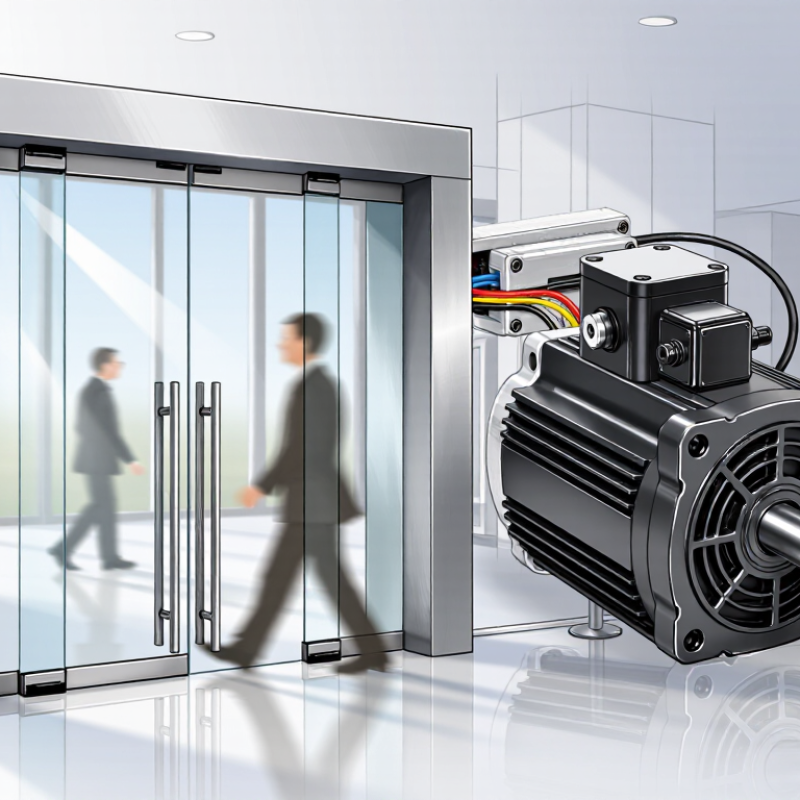
Brushless Motors: Structure and Operating Principles
Brushless Motors: Structure and Operating Principles
A brushless motor places stationary copper windings in the stator and permanent magnets on the rotor. The rotor turns inside a narrow air gap as the controller energizes the windings in sequence. No brushes touch. Electronic commutation replaces the mechanical brush-and-commutator assembly found in brushed motors. Hall sensors may report rotor position; sensorless designs can estimate it from back electromotive force.
For an automatic door, the controller adjusts current to manage opening, closing, and changing loads. A gearbox may reduce motor speed and increase usable torque. This arrangement can reduce brush wear and support smooth, controlled movement, but performance depends on the drive electronics, installation, and maintenance. It is not automatically more efficient in every door. Dust, misalignment, or poor tuning can still cause rough motion.
The IEA’s 2011 report on electric motor-driven systems estimates that these systems use about 46% of global electricity. The U.S. Department of Energy’s 2014 motor-systems sourcebook estimates motors account for about 68% of U.S. manufacturing electricity use. These figures cover broad motor systems, not automatic doors, so they should not be treated as door-specific savings claims. They do show why motor design and control deserve attention. A practical assessment should measure the complete door system, not just the motor.
7 Brushless Motor Benefits for Automatic Doors
Structure and operating principles: idealized three-phase motor currents
The curves show normalized, idealized three-phase currents, with each phase offset by 120 electrical degrees. An electronic controller switches current through the motor windings to produce rotation; actual current waveforms vary with motor design and control method.
- No brush assembly to replace, reducing brush-related servicing.
- Electronic commutation supports controlled starting and stopping.
- Speed can be adjusted to suit door opening and closing profiles.
- Torque can be controlled to help manage door movement.
- Fewer brush-wear particles inside the motor.
- Efficient operation is possible when the motor and controller are well matched.
- Reduced brush friction can support long service life; results depend on installation and operating conditions.
How Brushless Motors Power Automatic Doors
Brushless motors power automatic doors by switching current electronically rather than using carbon brushes. A controller adjusts the motor’s magnetic fields as the door moves. This allows controlled starts and stops, which can reduce jolts at the end of each cycle. In practice, the door should glide rather than shudder. Smoothly.
Because there are no brushes to rub against a commutator, one source of wear is removed. Brushless designs can also run efficiently and quietly when correctly matched to the door’s weight and duty cycle. They are not maintenance-free, though. Bearings, drive belts, sensors, and tracks still need inspection. A misaligned track can make even a capable motor strain, waste energy, and sound rough. Real-world performance depends on the full door system, not the motor alone.
Tips: Keep the track clean and check that the door travels freely by hand, following the manufacturer’s safety guidance. Note unusual noise or slower movement; these changes may signal drag or a control issue. A motor upgrade cannot fix every mechanical problem.
Seven Key Benefits of Brushless Motors for Automatic Doors
Brushless motors can make automatic doors more efficient because they avoid friction from brushes and use electrical power more directly. Less energy becomes unwanted heat during repeated opening cycles. They also have fewer wearing contact parts, which can reduce routine maintenance. Less noise. In a busy clinic or office, quieter movement can make each doorway feel less disruptive.
Electronic control is another benefit. A brushless motor can adjust speed and torque across the door’s travel, helping it start smoothly and slow near the end. This can reduce jolts to the panel and frame. Predictable motion may also help the door work consistently with its control and sensing equipment, though it does not replace properly installed safety sensors. The result can be smoother daily operation, not magic.
Lower brush wear and reduced heat can support longer service intervals, especially where doors cycle often. Precise control may also help installers tune opening speed to the doorway and its traffic pattern. That matters when a lightweight interior door behaves differently from a heavier entrance panel. Still, performance depends on the whole system, including the motor driver, door balance, and maintenance. Brushless is not automatically better in every installation. It is worth checking the actual operating conditions.
Brushless Motors Compared with Brushed Motors
Brushless motors and brushed motors move automatic doors in different ways. A brushed motor transfers current through carbon brushes touching a commutator. That contact creates friction and gradually wears the brushes. In a busy entrance, repeated opening cycles can mean more inspection and eventual brush replacement. Brushless motors use electronic control instead of those contacting parts. Fewer wear points can support longer service intervals.
There is a trade-off. A brushed motor may be simpler and less costly to replace, while a brushless system depends on its controller and correct setup. Brushless does not mean maintenance-free. Dust, poor alignment, worn rollers, or a failing power supply can still affect operation.
Listen for changes. A door that hesitates or closes unevenly may have a mechanical issue, not a motor problem.
In practice, technicians should check the full door assembly, including sensors and travel settings, before blaming the motor. Compare operating cycles, load, noise, and service access at the actual site.
One detail is easy to miss: a quieter motor cannot compensate for a dragging door. Brushless can be a sound choice, but the best option depends on the door and its workload.
Factors to Consider When Selecting a Brushless Door Motor
7 Best Brushless Motor Benefits for Automatic Doors?
Factors to Consider When Selecting a Brushless Door Motor
A brushless motor can offer precise speed control and reduced routine maintenance, but the right choice depends on the door and its operating conditions. Check the required torque at startup, not just the motor’s peak rating. A heavy glass door, for example, may need a different force profile than a lightweight interior door. Fit matters.
Estimate daily cycles and duty cycle. A busy entrance may run continuously during peak hours, so confirm the motor’s thermal limits and rated operating time. Also check that its controller supports the door’s sensors, speed settings, and feedback devices. These details affect smooth opening and safe stopping. Compatibility is easy to overlook.
For context, the U.S. Department of Energy’s 2014 sourcebook, Improving Motor and Drive System Performance, estimates that motor-driven systems account for about 68% of electricity use in U.S. manufacturing. That figure is not a door-motor efficiency rating, but it underlines why operating conditions matter. Compare energy use under realistic loads, rather than relying on a headline efficiency figure. I would not select a motor by efficiency alone; that shortcut can miss noise, heat, or poor low-speed control. Finally, check the enclosure rating for dust or moisture and review service access. A technically capable motor can still be a poor fit.
Conclusion
Brushless motors use electronic controls to switch current through stationary windings, creating a rotating magnetic field that moves the rotor without brushes rubbing against it. In an automatic door, this controlled rotation drives the opening and closing mechanism, while sensors and a controller help regulate movement. What are the benefits of brushless motors in automatic doors? Their design can provide efficient operation, quieter movement, reduced wear, less routine maintenance, precise speed control, reliable performance, and a long service life.
Compared with brushed motors, brushless models avoid brush-related friction and replacement, though the motor and its electronic controller may have a higher initial cost. Choosing a suitable motor involves considering the door’s size and weight, how frequently it will operate, the required speed and control features, operating conditions, installation requirements, and maintenance needs. Matching these factors helps ensure smooth, dependable door operation.

 Labor Door