How to Measure a Rough Opening for Overhead Lifting Doors?

Time:2026-05-07 Author:Charlotte
0%

When considering how to measure a rough opening for an overhead lifting door, precise measurements are crucial. An accurate rough opening ensures proper fit and functionality. Many homeowners and contractors overlook this important step. They might rush and later face issues.

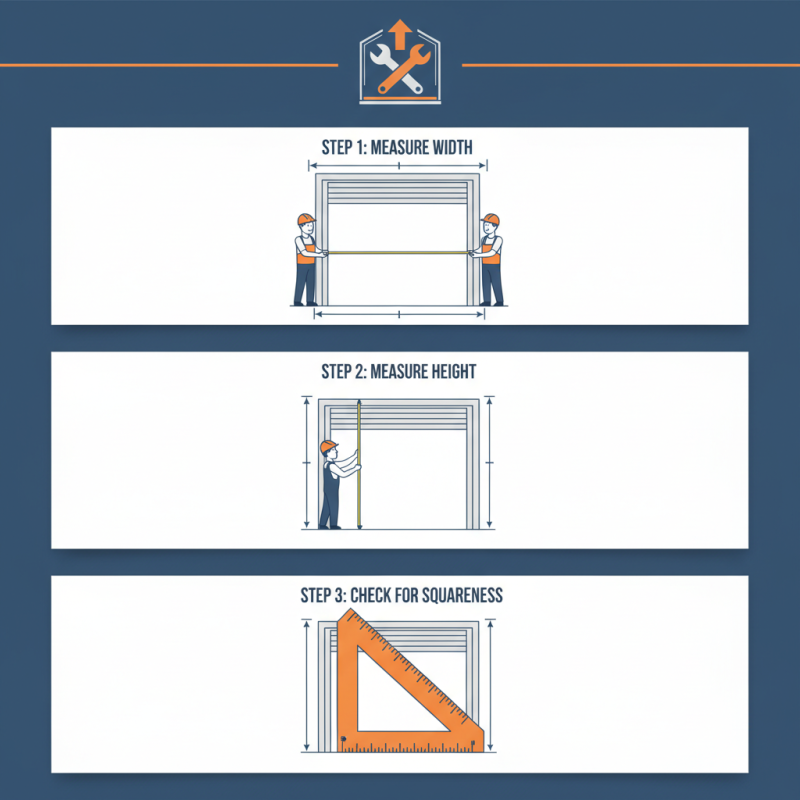
Measuring a rough opening requires careful attention to detail. Start by checking the wall's width and height. Use a reliable tape measure. Take measurements at multiple points. This practice accounts for any irregularities in the wall. Common mistakes often occur when assuming uniformity.

Inadequate measurement can lead to expensive errors, necessitating costly adjustments or replacements. Understanding how to measure a rough opening for an overhead lifting door can save both time and money. Knowledge in this area reflects professionalism. Taking the time to measure correctly shows commitment to quality work.
How to Measure a Rough Opening for Overhead Lifting Doors?

Understanding Rough Openings for Overhead Lifting Doors

When installing overhead lifting doors, understanding rough openings is crucial. A rough opening refers to the space in which the door will be installed. Getting the dimensions right ensures the door operates smoothly. Most importantly, measure the width and height accurately. Use a level to check the sides. An uneven surface can complicate installation.

Tips: Always double-check your measurements. One small mistake can lead to a poor fit. Remember, a little extra space is preferable to being too tight. Consider the wall thickness as well. It can affect how the door sits.

Try to visualize the door in place. Will it slide easily? Is there space for any necessary hardware? If your opening dimensions are off, adjustments can be challenging. Consider framing for support. Balancing all elements is key. It's normal to encounter issues during this process. Reflection will help improve future installations.

Industry Standards for Measuring Overhead Door Openings

Measuring the rough opening for overhead lifting doors requires accuracy and adherence to industry standards. According to the Door Manufacturers Association, a minimum clearance of 12 inches is essential above the door. This space allows for proper door operation and installation. The rough opening must also extend beyond the door frame width by 1 to 2 inches on either side. This accommodates any adjustments during installation.

Industry reports indicate that nearly 30% of installation mistakes stem from mismeasuring the opening. It’s crucial to measure the height and width multiple times for accuracy. Use a level tool to ensure these dimensions are square, as any variance can lead to improper door functionality. Additionally, checking the vertical alignment can prevent complications like door binding.

Proper planning can mitigate costly errors. It’s beneficial to visualize the finished fit. Overestimating or underestimating the opening size can result in wasted materials. Regular training for installation teams can improve measurement accuracy. Keeping updated with revisions in industry guidelines ensures better practices. The reliability of the installation process hinges on these standards being met.

How to Measure a Rough Opening for Overhead Lifting Doors?

Dimension Measurement (in inches) Comments
Overall Width 96 Measure from left to right at the widest point.
Overall Height 84 Measure from the floor to the top of the opening.
Headroom 12 Distance from the top of the door to the ceiling.
Side Room 3 Space available on each side of the opening.
Depth 6 Measured from the front of the door to the back wall.

Tools and Techniques for Accurate Rough Opening Measurement

Measuring a rough opening for overhead lifting doors requires precision. Accurate measurements ensure the door fits properly, enhancing functionality and aesthetics. Industry data indicates that improperly measured openings lead to installation issues in over 30% of cases. The right tools are crucial. A simple measuring tape might suffice for basic tasks. However, a laser measurement tool offers greater accuracy, especially in larger openings.

Various techniques ensure that measurements are reliable. Start by checking the floor for level. Measurements should be taken from the highest point, which often dictates the rough opening size. Document each measurement carefully. Recording helps prevent mistakes. Use a carpenter's square to verify angles. Square corners are essential for a snug fit. Be mindful of common pitfalls, such as neglecting to account for wall thickness.

Also, consider environmental factors. Humidity and temperature can affect wood dimensions, potentially leading to discrepancies. Industry professionals suggest taking measurements at different times to account for these changes. By implementing reliable tools and techniques, you enhance the quality of your work. Remember, it’s the small details that often make the biggest difference in installation success.

Common Mistakes in Measuring Rough Openings for Doors

Measuring rough openings for overhead lifting doors can be tricky. Common mistakes often stem from overlooking critical dimensions. Many beginners fail to measure both the width and height accurately. Deviations as small as half an inch can lead to costly errors. A recent industry report indicated that 35% of door installation issues are due to incorrect rough opening measurements. This highlights the importance of precision.

Another frequent error is neglecting to account for the framing structure. The framing material can shift with temperature changes. Woods expand and contract, impacting the final fit of the door. Neglecting these factors can result in operational issues. It's essential to ensure measurements reflect the actual opening, not just the theoretical size.

Using a level to check for plumb and square can prevent mistakes. Many DIY installers skip this vital process. An uneven rough opening can lead to sagging doors and operational failures. According to data, about 40% of overhead door repairs stem from initial installation flaws linked to measurement issues. Careful measurement, attention to details, and proper tools are essential for a successful installation.

Calculating Clearance and Headroom for Overhead Lifting Doors

Calculating clearance and headroom is crucial when measuring for overhead lifting doors. It's essential to ensure there’s enough space for the door to operate properly. Typically, the headroom needed is at least 12 inches above the door's top when it’s fully opened. However, this can vary based on the type of door and its intended function. For a standard overhead door, factoring in the door height is necessary to avoid miscalculations.

When measuring the rough opening, consider any obstructions that could interfere with the door's path. This includes beams, lights, or ductwork. A clear measurement allows for efficient installation and smooth operation. During the process, double-check your numbers. It’s better to take time now than to face problems later. Even experienced installers can overlook simple details. A slight miscalculation can lead to costly adjustments down the line. Always measure twice and think about future adjustments for accessories like weather seals or additional clearance needs.

Measuring Rough Openings for Overhead Lifting Doors

This chart illustrates the recommended clearance and headroom measurements for various sizes of overhead lifting doors. Proper measurements ensure efficient operation and installation of the doors.

FAQS

: Why is accurate measurement important for rough openings?

: Accurate measurements ensure a proper fit, enhancing door functionality and aesthetics.

What tools should I use for measuring rough openings?

A simple measuring tape may suffice, but a laser measurement tool offers greater accuracy for larger openings.

How do I ensure my measurements are reliable?

Start by checking the floor for level and document each measurement carefully to avoid mistakes.

What common pitfalls should I watch for when measuring?

Neglecting to account for wall thickness and overlooking square corners can lead to installation issues.

How do environmental factors affect measurements?

Humidity and temperature can alter wood dimensions, creating discrepancies in measurements.

What is the recommended headroom requirement for overhead doors?

Typically, at least 12 inches of headroom is needed above the door when fully opened, but it may vary.

Should I check for obstructions when measuring?

Yes, check for beams, lights, or ductwork that could interfere with the door's path during operation.

What should I do if I find a discrepancy in my measurements?

Double-check your numbers—it's better to be thorough now than to face issues later.

What can happen with slight miscalculations?

A minor miscalculation can lead to costly adjustments during installation.

How often should I measure for accuracy?

Measure twice and consider future needs, like weather seals or additional clearance, to ensure a good fit.

Conclusion

When considering "How to measure a rough opening for an overhead lifting door?", it is essential to understand the dimensions and standards that govern these installations. Rough openings must adhere to industry standards to ensure proper fitting and functionality. Accurate measurement is crucial, and using the right tools and techniques can help achieve this goal.

Common mistakes often occur during the measurement process, such as overlooking the necessary clearance and headroom, which are vital for the door’s operation. By focusing on these aspects and following best practices, one can effectively measure and prepare the rough opening for overhead lifting doors, ensuring a seamless installation process and optimal performance.

Charlotte

Charlotte

Charlotte is a seasoned marketing professional with a deep understanding of the company's portfolio and a passion for elevating its presence in the market. With a keen eye for detail and a commitment to excellence, she ensures that our professional blog is regularly updated with insightful articles......