5 Tips for Safe Glass Automatic Doors in Busy Retail?

Time:2026-10-09 Author:Charlotte
0%

Are glass automatic doors safe for high-traffic retail? The answer depends on design, installation, maintenance, and daily supervision. Clear glass can create a bright entrance, but shoppers may miss the panels when sunlight reflects across the surface. Children, older customers, and people carrying bags need extra visual guidance.

This introduction to “5 Tips for Safe Glass Automatic Doors in Busy Retail” examines practical controls. It considers sensor coverage, opening speed, safety edges, visible markings, and scheduled inspections. It also explores how entrance layouts influence queues, shopping carts, wheelchairs, and hurried pedestrians. A technically compliant door can still create problems when displays block sensors or crowds press against its opening area.

Automatic-door safety consultant John R. Schmid states, “Reliable operation begins with correct installation and continues through regular inspection.” His point is easy to overlook. Retail teams often focus on appearance and customer flow, while small warning signs receive less attention. A delayed opening, unusual motor noise, or repeated sensor reversal deserves immediate review.

No system is perfect. Even well-maintained doors may behave differently during heavy rain, glare, power interruptions, or unusually dense foot traffic. That uncertainty matters. Safe retail entrances require visible glass markings, clear floor space, trained employees, and documented maintenance. The following five tips offer a practical starting point, not a substitute for professional assessment. They are designed to help retailers notice weak points before a busy entrance turns a minor fault into a serious collision.
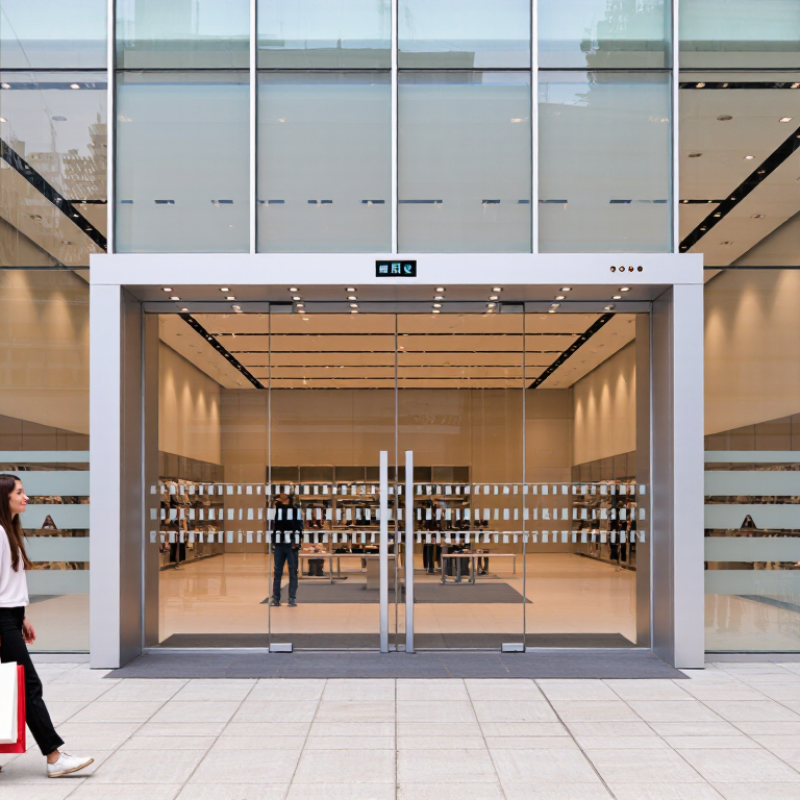
5 Tips for Safe Glass Automatic Doors in Busy Retail?

Understanding the Main Safety Risks of Automatic Glass Doors

5 Tips for Safe Glass Automatic Doors in Busy Retail

Understanding the Main Safety Risks of Automatic Glass Doors

Glass automatic doors can look harmless, yet busy entrances create several risks. Customers may enter from both directions, carry bags, or watch their phones. Children can move below sensor height. Reflective glass may also hide a closed panel. The U.S. Consumer Product Safety Commission’s NEISS data tracks emergency-department injuries involving doors. Its estimates are projections, not a complete incident count. That limitation matters. Retail managers should not treat low reports as proof of low risk. ANSI/BHMA A156.19 also provides technical requirements for low-energy automatic doors, including controlled speed, force, and activation.

Tip 1: Test sensors every opening day. Walk slowly through the threshold. Check both directions. Tip 2: Keep the detection zone clear. Do not place baskets, signs, or displays beside the sensors. A small obstruction can create a large blind spot. Tip 3: Inspect glass markings. Use visible eye-level decals and lower contrast bands. People need a clear stopping cue, especially in glare.

Tip 4: Watch closing behavior during peak periods. The door should not hesitate, strike, or close behind a slow child. Tip 5: Schedule documented maintenance by qualified technicians. Record sensor tests, force checks, damage, and corrective action. A cracked panel is not merely cosmetic. It can change visibility and create sharp failure hazards. Staff training is often overlooked. It should not be. Workers need a simple response plan for blocked doors, unusual noises, and repeated sensor failures.

5 Tips for Safe Glass Automatic Doors in Busy Retail

Understanding the Main Safety Risks of Automatic Glass Doors

The chart uses a practical 1–5 risk-priority scale for a busy retail entrance, where 5 indicates the highest priority for prevention. Regular sensor testing, clear visibility markings, controlled pedestrian flow, intact safety glass, and dry, unobstructed thresholds can reduce these hazards. The scores are an illustrative site-assessment model, not injury statistics.

Choosing Safety Features for Busy Retail Environments

Choosing Safety Features for Busy Retail Environments

Choosing safety features for busy retail environments requires more than selecting attractive glass. Staff should observe customer flow, shopping carts, children, and delivery traffic before choosing an automatic door. A clear sightline matters. Use laminated safety glass, high-contrast edge markings, and visible door frames. These details help shoppers notice the moving panel, especially near bright entrances.

Presence sensors should detect people who pause inside the opening, not only those crossing it. Add overhead safety sensors and controlled closing speeds. Low-energy operation can reduce impact when traffic becomes unpredictable. A manual release or emergency opening function gives staff another response during power or control failures. Keep floor guides flush. Small trip hazards become serious near crowded entrances.

Ask qualified installers to verify sensor coverage at child height and wheelchair height. Test the door with carts, umbrellas, wet shoes, and evening glare. Maintenance teams should record force checks, sensor tests, glass damage, and unusual noises. Local safety codes and accessibility requirements still need review. A common mistake is trusting factory settings for every entrance. They are not always suitable. Retail layouts change, so reassess the door after moving displays or queue barriers, then record the results during peak hours.

5 Tips for Safe Glass Automatic Doors in Busy Retail? – Choosing Safety Features for Busy Retail Environments

A practical selection and inspection guide for glass automatic pedestrian doors exposed to frequent customer traffic, carts, children, and peak-hour congestion.

Tip Safety Feature What to Choose Recommended Retail-Energy Check Why It Matters
1 Use safety glazing Select safety glass suitable for doors, such as fully tempered glass or laminated safety glass, and verify that it complies with the building and glazing codes applicable to the installation. Inspect for cracks, chips, edge damage, loose components, and missing safety markings. Replace damaged glass promptly using a qualified installer. Tempered glass is designed to fracture into smaller particles when broken, while laminated glass is designed to retain fragments on an interlayer.
2 Protect the detection zone Choose presence-sensing and motion-sensing controls that monitor the doorway, threshold, and closing path. The sensor arrangement should suit the door type and surrounding layout. Test the door from different approach angles with adults, children, shopping carts, and mobility devices. Confirm that the door opens or remains open when a person is in the monitored area. Reliable detection helps reduce the risk of contact, trapping, or closing against people who pause in the doorway.
3 Prioritize safe movement and visibility Select operators with controlled opening and closing, adjustable hold-open settings, obstruction detection, and clearly visible glass markings that comply with local accessibility requirements. Keep the threshold and swing or sliding path free of displays, mats, merchandise, cables, and promotional signs. Check that markings remain visible and have not been covered by decals. Clear sightlines and predictable movement help customers recognize the door and reduce collisions in crowded entrances.
4 Provide emergency and manual release Choose a system with a clearly identified manual opening method, emergency release, and—where appropriate for the configuration—a tested breakout or fail-safe function. Confirm that staff know how to place the door into its approved emergency mode. Keep exits and release controls accessible, unobstructed, and clearly identified. Customers and staff need a dependable way to move through the entrance during power loss, fire alarm conditions, equipment faults, or other emergencies.
5 Maintain and document the system Use a written inspection plan covering sensors, operators, glass, guide tracks, hinges, thresholds, emergency functions, and warning signs. Have adjustments and repairs performed by trained personnel. Carry out visual checks at opening and during busy periods, record faults, and arrange periodic professional servicing according to the equipment instructions and applicable regulations. Frequent retail use can accelerate wear, misalignment, sensor contamination, and hardware loosening; documented maintenance helps identify problems before an incident occurs.

Selection note: Door safety requirements vary by country, building type, door configuration, and accessibility rules. Confirm the final design, installation, testing, and maintenance arrangements against applicable local regulations and recognized automatic-door standards.

Installing Automatic Glass Doors Correctly

Installing automatic glass doors correctly starts before the first drill. Measure traffic flow, opening width, floor level, and nearby displays. A site survey reveals problems that drawings often miss. Check the glass specification, frame strength, and operator capacity together. Do not treat them as separate parts. I have seen small floor slopes create uneven gaps and noisy movement. That mistake is easy to underestimate.

Position sensors to detect children, carts, wheelchairs, and people carrying packages. Test detection from several angles, not only the centerline. Set opening speed carefully for the store’s busiest period. The door should not rush, stall, or close against a slow customer. Add visible safety markings at eye level.

Keep the travel path clear of shelves, mats, and promotional stands. Confirm emergency release, manual operation, and power-failure behavior before opening day. Record every test and final setting.

Installation should follow manufacturer instructions and applicable local building, accessibility, and fire-safety requirements. A qualified installer should verify anchoring, wiring, sensor alignment, and protective edges. Ask for a practical handover, not just a signature. Staff need to know how to isolate the door and report unusual sounds. Weekly visual checks can catch loose fittings, damaged glass, or delayed closing. Realistically, no installation stays perfect forever. Retail layouts change, and sensors may need repositioning. Recheck performance after renovations, seasonal displays, or sudden traffic increases.

Maintaining Sensors, Glass Panels, and Door Mechanisms

5 Tips for Safe Glass Automatic Doors in Busy Retail

Tip 1

Test motion sensors every morning. Walk toward the entrance from different angles. The door should open smoothly without hesitation. Clean sensor covers with a soft, dry cloth. Dust can create delayed responses.

Tip 2

Keep glass panels visibly safe. Check for chips, cracks, loose fittings, or cloudy edges. Small damage may spread after repeated impacts. Use approved safety markings at eye level. They help children and distracted shoppers notice the glass.

Tip 3

Watch the door’s closing force. It should stop or reverse when resistance appears. Place a soft test object in its path, following the system’s safety guidance. Never force the panels by hand. That test is easy to overlook.

Tip 4

Inspect hinges, rollers, guides, and floor tracks regularly. Listen for scraping, rattling, or uneven movement. These sounds often appear before a failure. Keep the track clear of receipts, grit, and packaging straps. Arrange qualified service when adjustments or electrical work are needed. Store staff should not improvise repairs.

Tip 5

Record inspections with dates and observed faults. Include sensor tests, glass checks, and cleaning details. A simple log improves handovers between shifts. It also reveals repeated problems, although records are sometimes incomplete during busy periods. Keep the entrance controlled until a trained technician confirms safe operation.

Training Staff and Inspecting Doors for Ongoing Safety

Busy retail entrances expose small faults quickly. A door may hesitate during morning deliveries, then close normally at noon. Staff should recognize these warning patterns instead of dismissing them as occasional glitches. Training should include a short demonstration of sensor coverage, opening speed, and safe standing positions. Keep hands, carts, and loose clothing away from moving glass panels. New employees should practice with an experienced supervisor nearby. It takes minutes.

A clear response plan matters more than memorized technical terms. Staff should stop using the entrance if glass cracks, the door strikes someone, or sensors behave unpredictably. They can guide customers toward another safe route and contact a qualified service professional. Do not push panels, cover sensors, or reset controls without approval. Quick fixes may hide a serious fault. Staff should also know the location of isolation switches and emergency contact details.

Inspect the door at opening, after heavy deliveries, and whenever its behavior changes. Check the glass for chips, panel alignment, floor tracks, seals, sensor covers, and unusual sounds. Test detection from several angles, including someone using a mobility aid. Record the date, condition, and action taken. A simple log helps technicians identify repeated failures. Our checklist is not perfect. Dust near a sensor once escaped notice during a rushed inspection. Now one employee watches the doorway while another tests it. Never leave a questionable door operating unattended.

FAQS

What are the main risks around automatic glass doors?

Customers may approach from both directions, carry bags, or watch their phones. Children can move below some sensors. Reflections may hide a closed glass panel. Busy entrances increase uncertainty. Reports may also miss incidents.

How often should door sensors be tested?

Test the sensors every opening day. Walk slowly through the entrance from both directions. Try several approach angles. Check child and wheelchair heights when possible. Small delays matter.

What should staff keep away from detection zones?

Keep baskets, signs, displays, and queue barriers away from sensors. Even a small obstruction can create a blind spot. Recheck coverage after moving store fixtures. Layout changes are easy to overlook.

How can shoppers notice glass panels more easily?

Use visible eye-level decals and lower contrast bands. Clear door frames also improve recognition. These markings help children and distracted shoppers stop safely. Bright sunlight makes this more important.

What safety features suit a busy retail entrance?

Consider laminated safety glass, presence sensors, overhead sensors, and controlled closing speeds. The system should detect people who pause inside the opening. Flush floor guides reduce trip hazards. Attractive glass alone is not enough.

What should staff observe during peak traffic?

Watch whether the door hesitates, strikes, or closes behind a slow child. Test carts, umbrellas, wet shoes, and evening glare. Observe two-way traffic near the threshold. Real conditions reveal problems factory settings may miss.

What signs indicate damaged or failing door parts?

Look for chips, cracks, cloudy glass edges, loose fittings, scraping, rattling, or uneven movement. A cracked panel can affect visibility and create sharp failure hazards. Repeated sensor failures need attention. Do not improvise repairs.

How should maintenance checks be recorded?

Record inspection dates, sensor results, glass damage, force checks, cleaning, and corrective action. Include unusual noises and repeated faults. Logs support shift handovers. Records can be incomplete during rush periods, so review them carefully.

What should happen when the door behaves unusually?

Control the entrance and keep people away from the affected area. Use the manual release or emergency opening function if appropriate. Contact a qualified technician for adjustments or electrical work. This plan is not perfect, but guessing is worse.

Conclusion

Are glass automatic doors safe for high-traffic retail? They can be, provided their design, installation, and maintenance are handled carefully. Retail managers should first identify risks such as unexpected door movement, sensor blind spots, crowded entrances, slippery floors, and damaged glass. Safety features including reliable motion and presence sensors, emergency release functions, visible markings, protective glass, and controlled opening speeds can help reduce accidents in busy environments.

Correct installation is equally important because poor alignment or unsuitable settings may affect door performance. Regular maintenance should include testing sensors, inspecting glass panels for cracks, checking tracks and mechanisms, and removing dirt or obstacles from detection areas. Staff should also receive clear training on emergency procedures, daily checks, and how to report faults quickly. Ongoing inspections and prompt repairs help keep automatic glass doors accessible, predictable, and safe for customers and employees.

Charlotte

Charlotte

Charlotte is a seasoned marketing professional with a deep understanding of the company's portfolio and a passion for elevating its presence in the market. With a keen eye for detail and a commitment to excellence, she ensures that our professional blog is regularly updated with insightful articles......