When considering how to choose between a roller shutter and a sectional door, it's crucial to weigh various factors. Industry expert John Smith, a recognized name in garage door solutions, states, "The right choice hinges on your specific needs and environment." Roller shutters offer robust security and convenience, ideal for commercial settings. They can be compact, saving space while providing immediate access.
Conversely, sectional doors are often favored for residential garages due to their aesthetic appeal and insulation properties. They can elevate the curb appeal of your home and offer energy efficiency. Each option has its unique benefits, and what works for one may not suit another.
It's essential to reflect on your priorities. Is security your primary concern? Or is maintaining a visually appealing facade more important? Choose wisely and consider your future needs. Balancing practicality with aesthetics can lead to a decision that's both functional and satisfying.
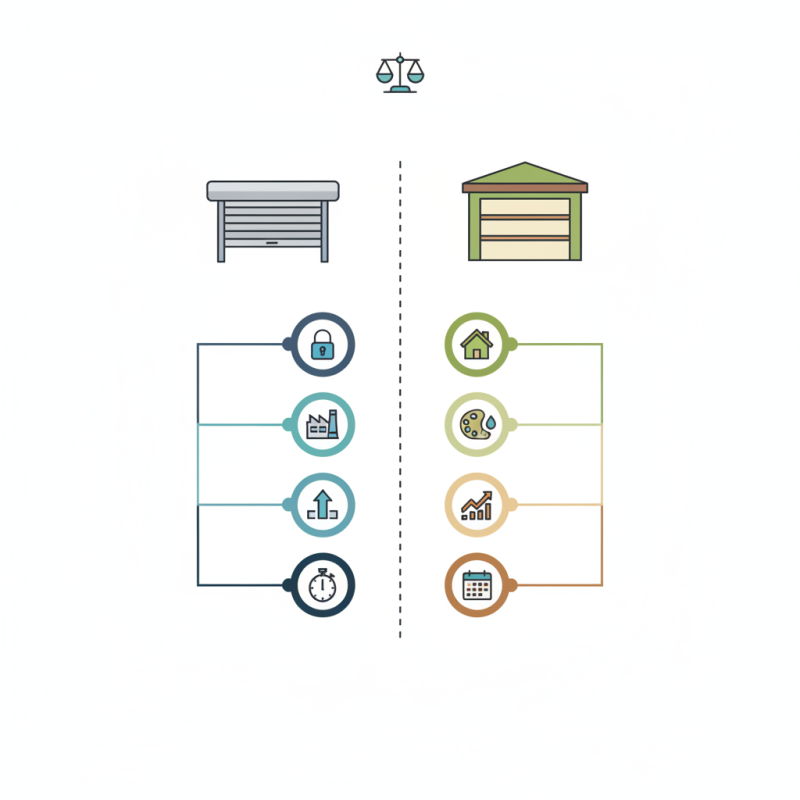
Understanding the Basics of Roller Shutters and Sectional Doors
When considering roller shutters and sectional doors, it's essential to understand their unique features. Roller shutters offer a compact design and effective security. They roll up neatly, saving space and allowing for full door openings. On the other hand, sectional doors are typically composed of hinged panels. They move up and down but require more space overhead.
When choosing between the two, consider your specific needs. **Tip 1:** Assess the available space. If your garage has limited room, roller shutters may be the best fit. **Tip 2:** Look into insulation needs. Sectional doors can provide better thermal efficiency due to their design and materials.
Both options have their pros and cons. Roller shutters can be less visually appealing to some. Their robustness is commendable but may not enhance the aesthetic of your property. Sectional doors may require some maintenance. Their hinges and tracks can collect dirt and may need regular checking. Balancing practicality and style is crucial.
10 Tips for Choosing Between Roller Shutters and Sectional Doors
| Criteria |
Roller Shutters |
Sectional Doors |
| Space Efficiency |
Compact design; ideal for tight spaces |
Requires more horizontal space for operation |
| Security Level |
Typically offers high security |
Good security but usually less than roller shutters |
| Insulation |
Moderate insulation properties |
Better insulation for temperature control |
| Aesthetic Options |
Various colors but limited designs |
Wide variety of styles and designs available |
| Maintenance |
Low maintenance; easy to clean |
Requires regular maintenance for optimal function |
| Installation Cost |
Usually lower installation costs |
Generally higher installation costs |
| Durability |
Highly durable materials used |
Durable but may dent more easily |
| Operation |
Quick roll-up operation |
Smooth sectional operation with more control |
| Weather Resistance |
Excellent resistance to rain and wind |
Good resistance but less than roller shutters |
| Flexibility |
Flexible for various openings |
Less flexible; designed for standard sizes |
Evaluating Your Space Requirements for Security Solutions
When choosing between roller shutters and sectional doors, consider your space requirements. Your environment dictates the type of security solution you need. Roller shutters often provide a sleek and modern appearance, making them an excellent choice for tight spaces. They retract fully, maximizing accessibility. In contrast, sectional doors require additional overhead space. If your area has limited headroom, roller shutters might be the ideal solution.
Think about the intended use of the area. For commercial properties, roller shutters offer quick access and versatile options. They can quickly close off large openings, enhancing security during off-hours. Sectional doors, however, are better suited for environments that demand insulation or weather resistance. Evaluate the climate and potential temperature fluctuations. The right choice should balance functionality with aesthetics, ensuring it blends with your existing architecture.
Don't overlook installation concerns. Both options have different requirements and costs. An experienced contractor can provide insights tailored to your specific space. Yet, initial thoughts may not cover all future needs. Reflect on how the chosen door might impact your space over time. Will it meet evolving security requirements? Addressing these aspects ensures you make a wise, informed decision.
Assessing Durability and Maintenance Needs of Each Option
When comparing roller shutters and sectional doors, evaluating durability and maintenance is crucial. Roller shutters are often made from aluminum or steel, making them resistant to weather and wear. According to a report by the International Association of Building Maintenance, they typically require minimal maintenance. Regular cleaning can extend their lifespan significantly, which can be as much as 20 years with proper care.
On the other hand, sectional doors utilize multiple panels. They may be more aesthetically versatile, but they can be susceptible to rust if not properly maintained. A study from the National Hardware Association shows that homeowners often underestimate the importance of lubrication and regular inspections. These doors may need replacement parts more frequently than roller shutters, especially in varying climates.
Many property owners struggle with the idea of maintenance versus durability. While roller shutters excel in longevity, sectional doors offer unique design flexibility. The choice depends not only on individual preferences but also on the commitment to ongoing care. Balancing these factors can guide you toward a more informed decision.
Durability and Maintenance Needs Comparison: Roller Shutters vs Sectional Doors
Comparing Aesthetic Appeal and Design Flexibility
When considering roller shutters versus sectional doors,
aesthetic appeal plays a critical role. Roller shutters offer a sleek and modern look. They can fit seamlessly into contemporary buildings.
In contrast, sectional doors provide a classic design. Their robust construction gives an industrial feel, appealing to certain styles of architecture.
Design flexibility is another key factor. Roller shutters can be customized in various colors and finishes. They can complement any exterior theme,
enhancing the overall beauty of a property. According to a recent industry report, 45% of homeowners prioritize aesthetics
when choosing garage doors. Sectional doors, though less customizable, can be designed with windows and paneling. This offers a touch of elegance
that can enhance curb appeal. However, this style might not suit all home designs.
Many homeowners struggle with these decisions. Roller shutters may clash with traditional structures. Sectional doors might interrupt modern minimalist lines.
Understanding your home’s design is crucial. Choosing the wrong door type could hinder your home’s aesthetic value. The decision should be informed by both
personal taste and the overall architectural design. Data suggests that well-chosen doors can increase property value by up to 20%.
Analyzing Cost Factors and Long-Term Investment for Both Choices
When considering roller shutters and sectional doors, cost factors play a significant role. Roller shutters are known for their initial lower price. They typically range from $1,200 to $2,500. On the other hand, sectional doors can cost between $2,500 and $5,000. This disparity raises questions about long-term investments. A study from the Garage Door Manufacturers Association suggests that sectional doors offer greater durability and energy efficiency. Over time, this could lead to lower energy bills and maintenance costs.
Longevity is another crucial aspect. Roller shutters last about 10-15 years, while sectional doors can last 20-30 years with proper care. Regular maintenance may involve costs that add up over time. Some homeowners overlook these factors, leading to unexpected expenses down the line. While roller shutters might seem appealing due to their price, they may not provide the same value in the long run.
Moreover, the aesthetic advantage of sectional doors can enhance property value. Homes with attractive garage doors report an increase in resale value by up to 4%. This is a notable consideration for homeowners who view their garage as an investment. Assessing these factors requires a clear understanding of both immediate costs and future benefits.
FAQS
: Roller shutters roll up for compact storage. Sectional doors move up and down with hinged panels.
Assess your space and insulation needs. Limited space favors roller shutters, while thermal efficiency leans toward sectional doors.
Some find roller shutters less attractive. Their primary design focuses on security and space-saving, not aesthetics.
Roller shutters require minimal upkeep. Regular cleaning can extend their lifespan, potentially up to 20 years.
Sectional doors need regular inspections. Hinges and tracks may collect dirt, requiring more frequent care than roller shutters.
Roller shutters are generally more durable, made from aluminum or steel. Sectional doors may rust if not maintained properly.
Yes, sectional doors may need replacement parts more often, especially in harsh climates, compared to roller shutters.
Consider personal preferences and maintenance willingness. Sometimes, practical choices may not align fully with style.
Yes, insulation significantly differs. Sectional doors typically offer better thermal efficiency than roller shutters.
Yes, roller shutters may lack charm, while sectional doors require committed upkeep. Reflect on your priorities before deciding.
Conclusion
When considering how to choose between a roller shutter and a sectional door, it is essential to understand the fundamental differences between the two options. Roller shutters are typically better suited for security, providing a robust barrier, while sectional doors offer convenience and space-saving advantages. Evaluating your specific space requirements can help you determine which solution aligns with your needs.
Moreover, assessing the durability and maintenance of each option is crucial, as this can impact long-term satisfaction. Aesthetic appeal and design flexibility are also important factors, as these elements affect the overall look of your property. Finally, analyzing the cost factors involved will help you make an informed decision regarding your investment in either a roller shutter or a sectional door.

 Labor Door