Why Use Variable Frequency Drives in High Speed Doors?

Time:2026-06-10 Author:Madeline
0%

Variable Frequency Drives (VFDs) have become pivotal in modern industrial applications, especially with high-speed doors. Experts emphasize their importance for energy efficiency and performance. For instance, Dr. David Thompson, a recognized specialist in automation technologies, once remarked, "The integration of VFDs transforms high-speed doors into intelligent systems, enhancing both speed and control."

In high-speed door systems, VFDs regulate motor speed and torque. This ensures smoother operations, reducing wear and tear. Additionally, they allow for precise speed adjustments. Effective use of a VFD minimizes energy use, providing significant cost savings. Energy consumption is a major concern in industrial settings, highlighting why use a variable frequency drive (VFD) in high speed doors?

However, there are challenges. Proper installation and programming are essential to achieve the desired benefits. Misconfigurations can lead to inefficiencies. Operators must ensure ongoing maintenance to avoid potential hiccups. The learning curve can be steep, making expertise highly valuable. Thus, while the advantages of VFDs are clear, the implementation process deserves careful consideration and reflection.
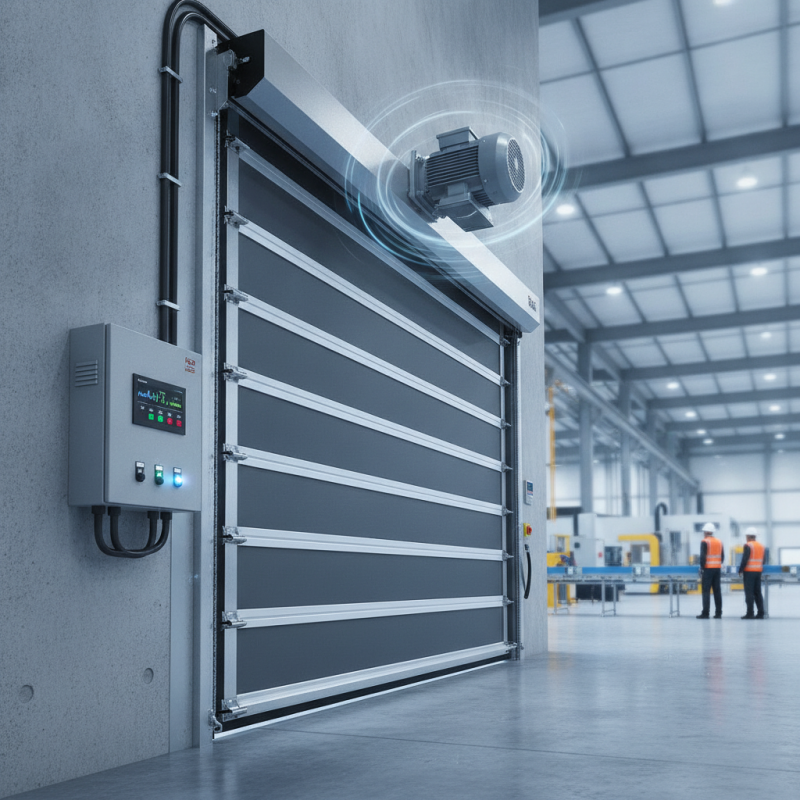
Why Use Variable Frequency Drives in High Speed Doors?

Advantages of Variable Frequency Drives for High Speed Doors

Variable frequency drives (VFDs) are essential for high-speed doors. They offer numerous advantages that enhance performance and efficiency. One of the primary benefits is energy savings. By controlling the speed of the motor, VFDs reduce energy consumption during operation. This not only lowers costs but also decreases wear and tear on the components.

Another significant advantage is improved operational efficiency. High-speed doors can open and close quickly, allowing seamless movement in busy environments. The VFD's ability to adjust acceleration and deceleration rates enhances this functionality. However, improper settings can lead to abrupt stops, causing stress on the door mechanisms. Regular monitoring and adjustments are crucial.

Moreover, VFDs improve safety features. They can be programmed to detect obstacles, reducing the risk of accidents. This adaptability ensures that high-speed doors can respond promptly to their surroundings. Yet, it’s essential to ensure that these systems are correctly calibrated. Neglecting this can lead to unreliable operations and potential hazards. Balancing performance with attentive maintenance remains a challenge for many operators.

Advantages of Variable Frequency Drives for High Speed Doors

How Variable Frequency Drives Enhance Operational Efficiency

Variable Frequency Drives (VFDs) are transforming the efficiency of high-speed doors. These systems precisely control the speed and torque of motors, enhancing performance across various industries. According to a report from the U.S. Department of Energy, implementing VFDs can lead to energy savings of 20-50%. This significant reduction is crucial as industrial energy consumption continues to climb.

High-speed doors equipped with VFDs operate smoothly, minimizing wear and tear over time. This decreases maintenance costs and downtime, improving productivity. In fast-paced environments, the ability to adjust speeds allows for better synchronization with workflows. A study by the International Energy Agency indicated that VFDs enhance not just energy efficiency but also process stability.

However, the reliance on technology like VFDs can introduce complexities. Initial setup requires expertise. Incorrect installation may negate efficiency benefits. Organizations must weigh potential energy savings against these installation challenges. Striking a balance is essential for maximizing operational efficiency while maintaining reliability in high-speed environments.

Reducing Wear and Tear with Variable Frequency Drives

Variable frequency drives (VFDs) play a crucial role in extending the lifespan of high-speed doors. By controlling the speed and torque of the motor, VFDs reduce stress on door components. This leads to less wear and tear over time. High-speed doors operate under intense conditions, making their electronic management vital for efficient use. A smooth opening and closing process can prevent mechanical failures.

Tips: Regular maintenance checks are essential. Inspect the drive settings periodically. Any irregularities can lead to reduced efficiency.

When high-speed doors travel at optimal speeds, they experience less friction. This results in minimized energy use and extended service life. However, improper calibration or infrequent adjustments can lead to issues. A detailed examination of motor feedback is critical. It ensures the VFD functions harmoniously with the door's mechanics.

Tips: Take note of any unusual sounds. Address such issues before they escalate. An early intervention can save time and costs.

Energy Savings Achieved Through Variable Frequency Drives

Variable Frequency Drives (VFDs) have become essential in high-speed door applications. They control the speed and torque of electric motors, significantly enhancing energy efficiency. According to the U.S. Department of Energy, implementing VFDs can lead to energy savings of 20% to 50% for industrial applications. This is particularly important considering that nearly 60% of a facility's energy consumption can be attributed to motor systems.

By optimizing motor performance, VFDs reduce unnecessary energy waste. High-speed doors, often used in environments like warehouses and manufacturing plants, benefit greatly from this innovation. They frequently cycle open and closed, which can consume substantial energy. A study by the Lawrence Berkeley National Laboratory found that high-speed doors paired with VFDs not only save energy but also decrease wear and tear on both the doors and their motors. This not only extends equipment lifespan but also reduces maintenance costs.

Yet, VFD technology is not without challenges. Some facilities may struggle with integrating VFDs into existing systems. Staff training becomes crucial to harness their full potential. Questions about the long-term reliability of VFDs also linger. Ensuring proper installation and regular maintenance can mitigate these concerns, leading to sustainable energy practices in high-speed door systems.

Flexibility and Control Offered by Variable Frequency Drives

Variable Frequency Drives (VFDs) play a crucial role in the operation of high-speed doors. The flexibility they offer transforms how these doors function in various environments. With VFDs, door speeds can be easily adjusted. This adaptability ensures that the doors open and close according to specific needs, enhancing operational efficiency. Properly configured, a VFD can optimize the door’s response time, reducing energy consumption during operation.

Control is a significant advantage of using VFDs in high-speed doors. They allow for precise adjustments in acceleration and deceleration. This capability prevents abusive stop-and-start cycles. Sudden movements can stress door components, leading to premature wear and possibly expensive repairs. By smoothing the operation, VFDs extend the life of these doors.

The integration of safety features is another important aspect. VFDs can be programmed with multiple safety protocols. However, maintaining this system requires attention. Users must regularly check for wear and software updates. Attention to detail in these areas improves reliability. Neglecting them could lead to increased downtime or even accidents. The benefits of VFDs are clear, yet they demand consistent monitoring to achieve optimal performance.

FAQS

: What are the advantages of using variable frequency drives (VFDs) for high-speed doors?

: VFDs provide energy savings, improved efficiency, and enhanced safety features, making high-speed door operations more effective.

How do VFDs save energy in high-speed door applications?

By controlling the motor speed, VFDs reduce energy consumption and lower operational costs.

What should be monitored to ensure VFDs operate effectively?

Regular checks of drive settings and acceleration parameters are crucial. Improper settings can lead to malfunctions.

How do VFDs extend the lifespan of high-speed doors?

VFDs reduce stress on components during operation, leading to less wear and tear over time.

What are the risks of improper calibration of VFDs?

Improper calibration can cause abrupt stops, increasing the risk of mechanical stress and costly repairs.

Why is it important to address unusual sounds from high-speed doors?

Unusual sounds can indicate issues. Addressing them early can prevent more significant problems and save costs.

How does the flexibility of VFDs enhance operational efficiency?

VFDs allow easy adjustments to door speeds, optimizing their operation for different environments and needs.

What are the safety features offered by VFDs?

VFDs can detect obstacles and have multiple safety protocols, but they require regular maintenance to ensure effectiveness.

What consequences can neglecting VFD maintenance have?

Poor maintenance can lead to increased downtime, potential hazards, and higher operational costs.

How do VFDs impact the overall maintenance of high-speed doors?

They require consistent monitoring and adjustments, which can be challenging but necessary for optimal performance.

Conclusion

In exploring "Why use a variable frequency drive (VFD) in high speed doors?", the advantages become evident across several key areas. Variable frequency drives enhance operational efficiency by allowing for precise control over the speed and movement of doors, which optimizes performance and reduces cycle times. This level of control also minimizes wear and tear on mechanical components, leading to longer equipment life and reduced maintenance costs.

Furthermore, VFDs contribute significantly to energy savings by enabling the motor to operate only as needed, lowering energy consumption substantially. The flexibility offered by VFDs allows for easy adjustments to the door's operation, improving adaptability for varying workloads and environmental conditions. Overall, the integration of variable frequency drives in high-speed doors not only enhances performance and reliability but also fosters significant cost savings and operational efficiency.

Madeline

Madeline

Madeline is a dedicated marketing professional with a wealth of expertise in our company's core offerings. With a keen understanding of the industry, she brings a unique perspective to her role, consistently delivering high-quality content that highlights the superior aspects of our products. As......